
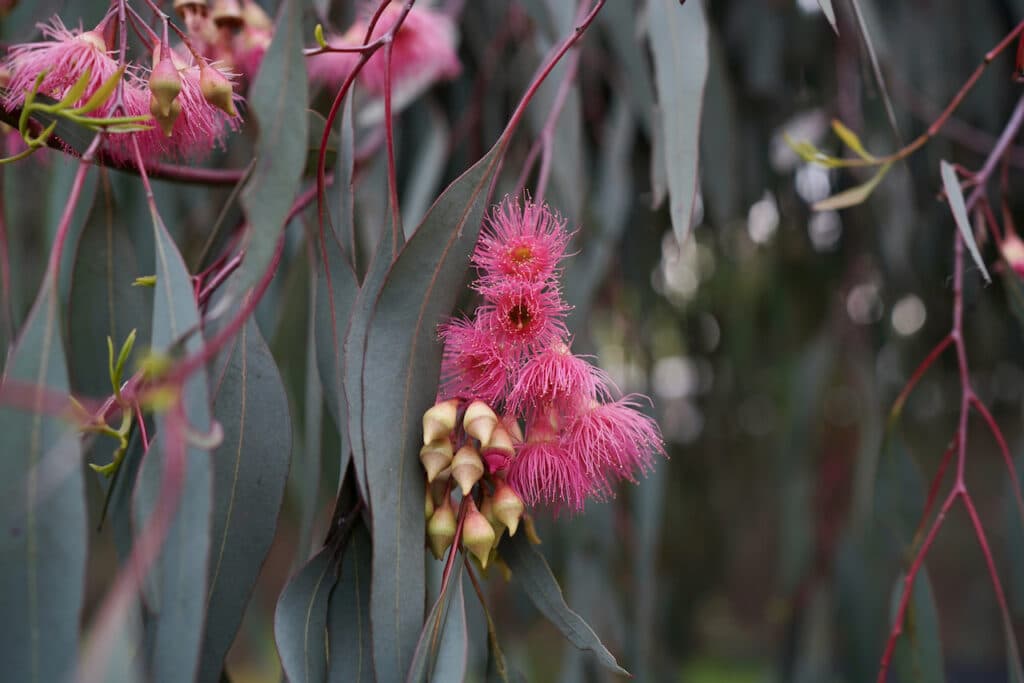
Red Ironbark
Eucalyptus tricarpa
A dense, slow-growing hardwood of Victoria's box-ironbark country. The kind of tree that takes a century to make and can outlast the buildings around it.
Where it grows
Red Ironbark is native to the drier foothill forests and box-ironbark woodlands of central and southern Victoria. It tolerates poor, rocky soils and long dry spells, which is exactly why it turns up along old rail corridors, roadsides and reserves across greater Melbourne.
Wildlife it supports
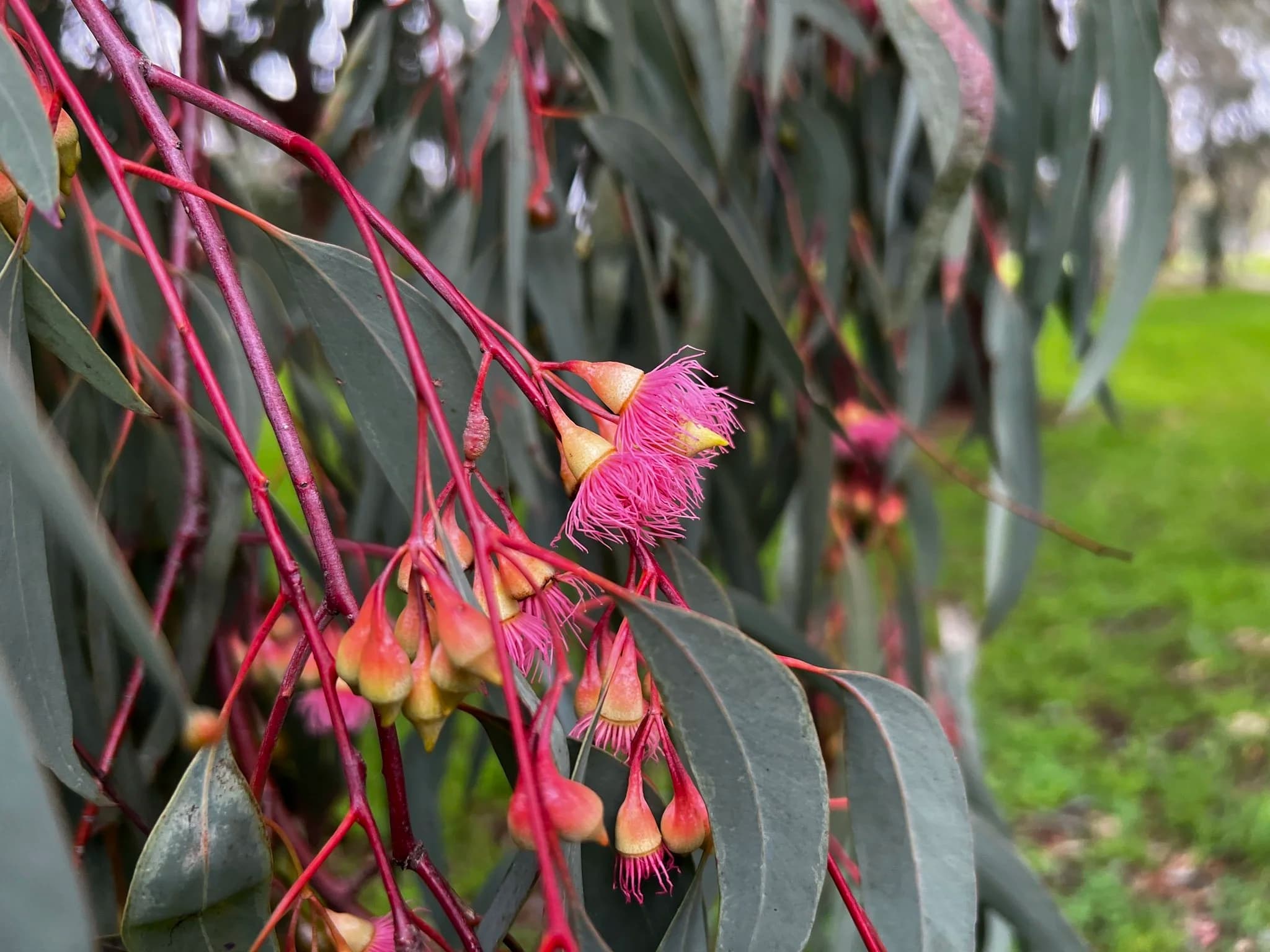
It flowers in late summer and autumn, when little else does, a critical nectar source. Older trees develop the deep hollows that Victoria's hollow-dependent animals rely on.
The timber
A deep red-brown heartwood, very hard and very durable. It blunts blades, is slow to dry, and moves little once seasoned, which makes it superb for outdoor furniture, decking and structural work that has to last. It is a demanding timber to work and rewards patience.
- kg/m³ air-dry density
- ~1120
- natural durability
- Class 1
- Janka hardness
- ~14 kN
Figures are indicative reference values for the species, not measurements of any one tree.